Skip to content
Fish of Norway

Logistics

Cold chain, Incoterms and documents

Seafood does not fail in the plant. It fails on a warm apron in a transit airport, in a reefer plugged in late, and in a document set that reaches the border two hours after the goods. Freight, temperature and paperwork are one problem, and we treat them as one.

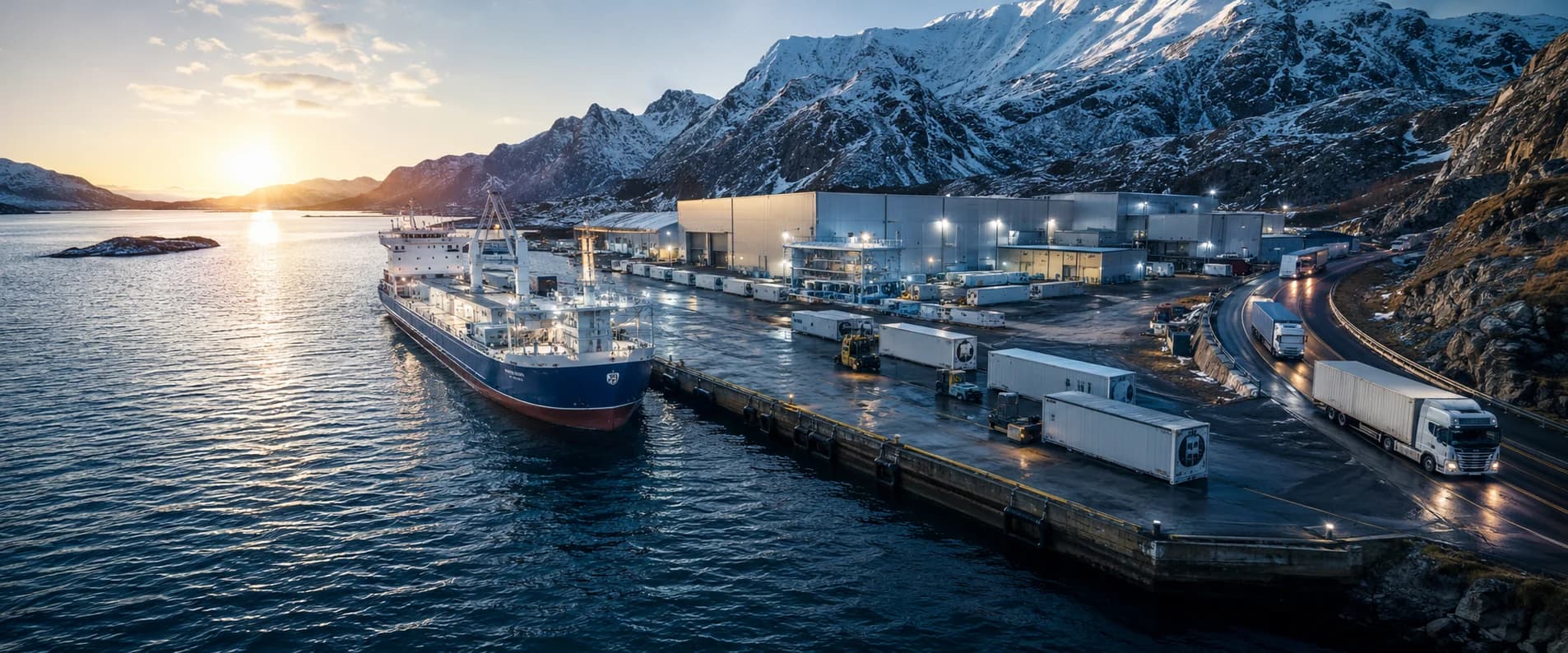
Norwegian seafood terminal at dawn with reefer containers and a coastal vessel alongside

Transport modes

Choosing the mode is choosing the risk

Refrigerated road

1–4 days

The backbone of fresh seafood into Europe. One vehicle, one temperature setting, one driver responsible from loading bay to delivery — which is why it produces fewer temperature excursions than any other mode. The constraint is geography, not capability.
Airfreight

12–48 hours

The only way to put fresh Norwegian seafood in Asia, the Gulf or North America inside its shelf life. The risk is not the flight; it is the ground time at transit, where product sits on an apron without active cooling. Coolant is specified for the worst-case transit, not the scheduled one.

Reefer container

10–45 days

The economics of frozen and cured volume. Set point, ventilation and pre-cooling are specified per product — a container set for chilled cargo will slowly ruin a frozen load, and the damage is not visible on arrival. We require the data logger download, not the driver’s word.

Live transport

24–48 hours

King crab in oxygenated boxes, with a survival window measured in hours. There is no partial failure here: a delay in customs or ground handling is a total loss, not a downgrade. Bookings are made with that asymmetry in mind and never on the cheapest routing.

Typical door-to-door transit as quoted by forwarders, counted from collection at the plant to delivery at the buyer’s address, including export handling and import clearance under normal conditions. Customs holds, inspection sampling and missed connections are not included. Last reviewed 15 September 2026.

The chain in practice

Three handovers where consignments are lost

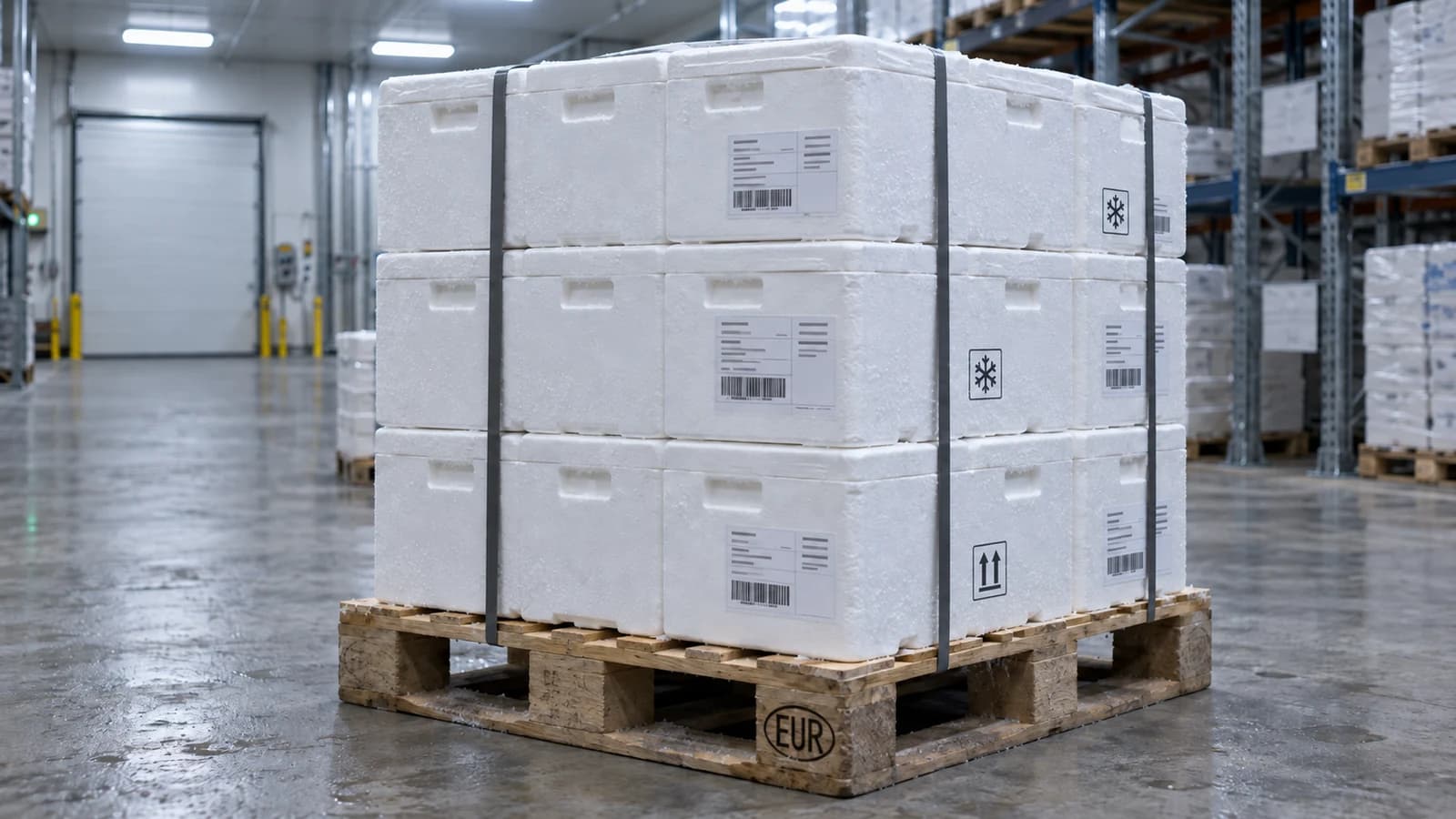
A strapped pallet of closed polystyrene seafood boxes with frost on the sides in a cold store
Pre-cooled and palletised. Boxes that leave the store above set point never recover in transit.
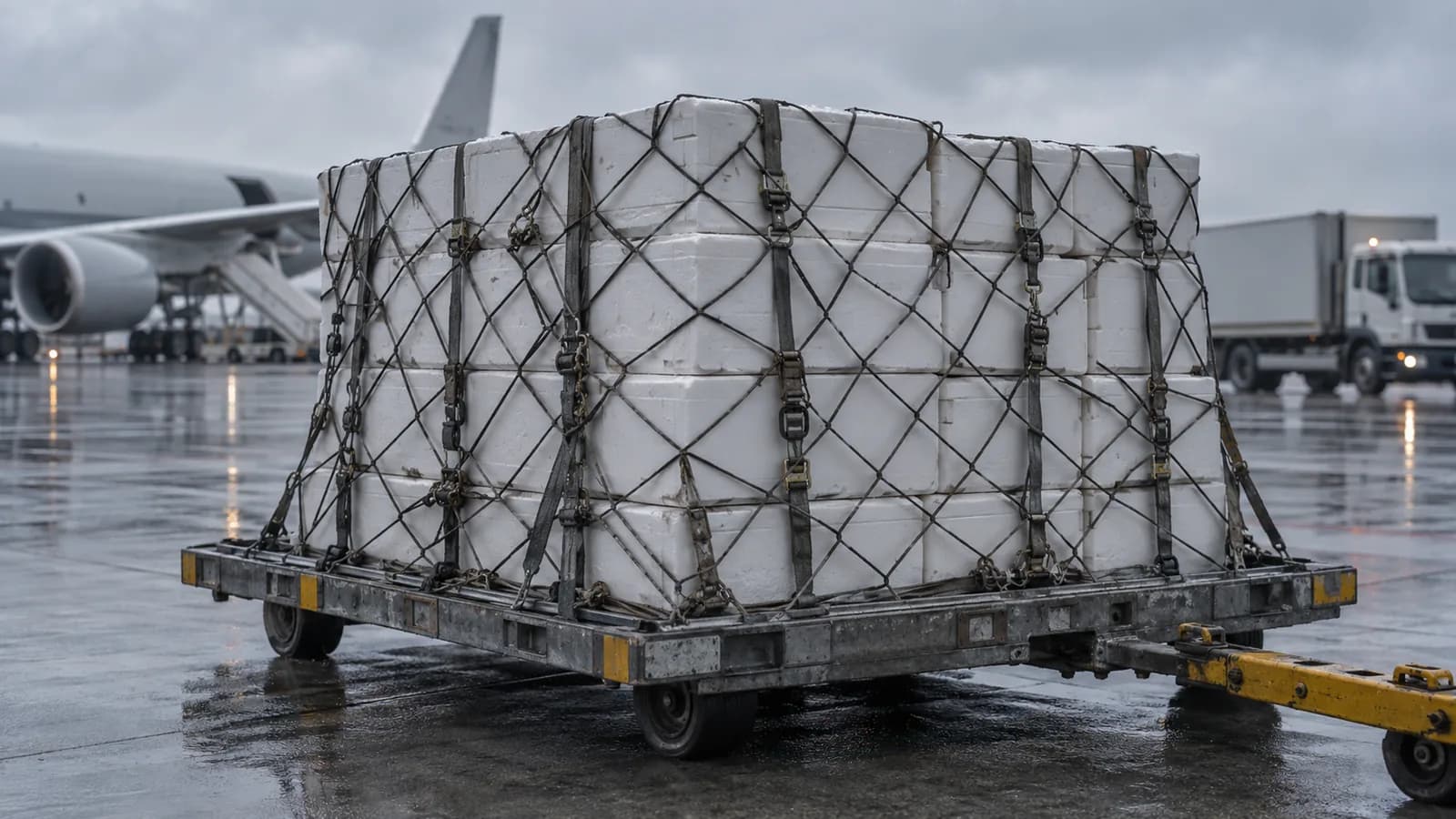
A netted stack of polystyrene boxes on an aircraft cargo dolly on wet tarmac, aircraft behind
The apron is the exposure. Coolant is specified for the worst-case transit, not the scheduled one.
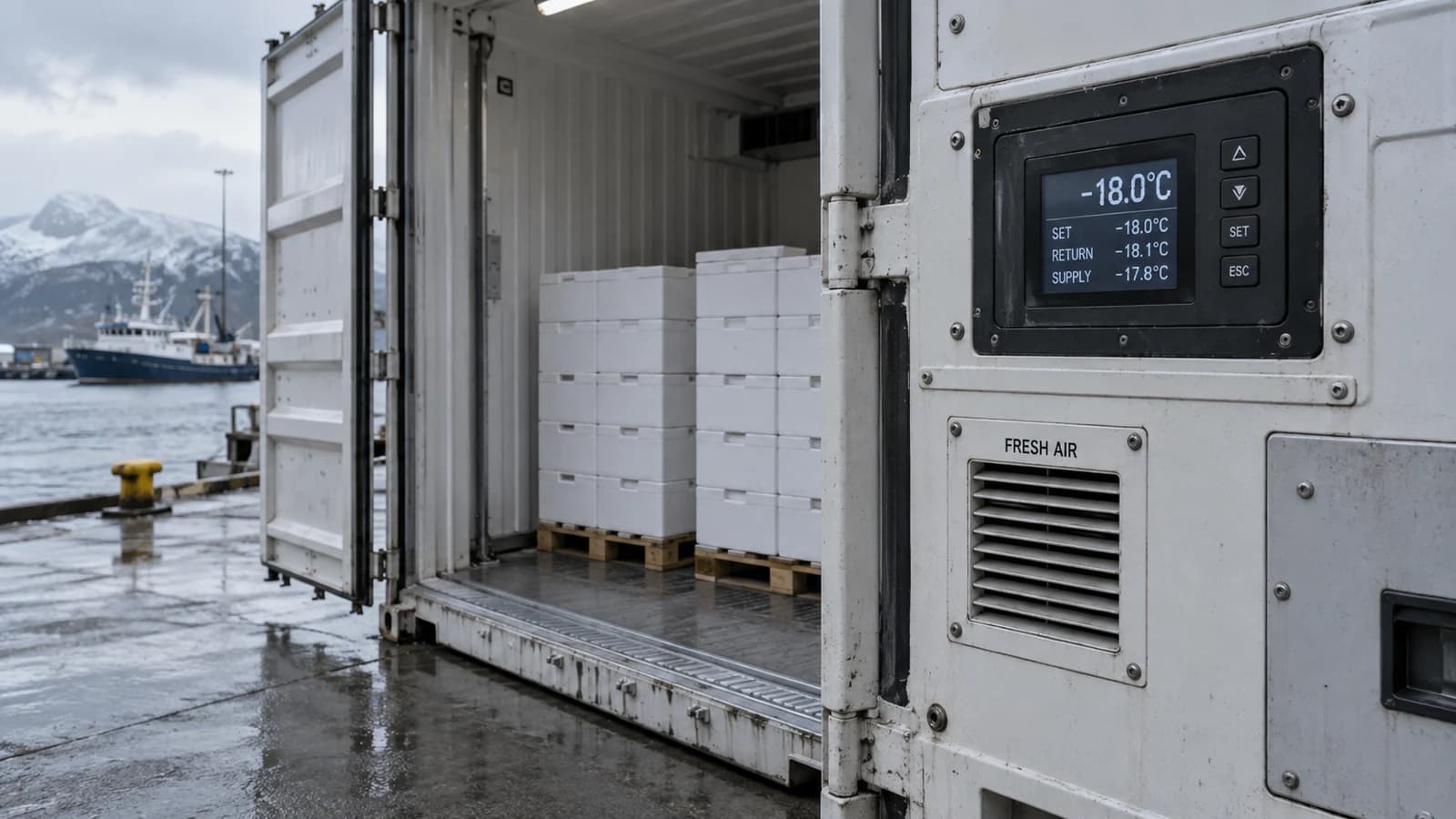
The control panel of an open reefer container at the quay showing a set point of −18 °C
Set point, ventilation and pre-cooling are specified per product, and the logger is read on arrival.

Incoterms 2020

Who carries the risk, and from where

An Incoterm decides where risk passes from seller to buyer. It is not a delivery service level and it does not say who pays for what beyond the listed obligations. Two offers on different Incoterms are not comparable until both are converted to the same one — which we do before you see them.

CodeTermWhere risk passesMode
EXWEx WorksBuyer carries risk from the seller’s premises.Any mode
FCAFree CarrierRisk passes when goods are handed to the buyer’s carrier.Any mode
FASFree Alongside ShipRisk passes alongside the vessel at the named port.Sea and inland waterway
FOBFree On BoardRisk passes once goods are on board the vessel.Sea and inland waterway
CFRCost and FreightSeller pays freight; risk still passes on board.Sea and inland waterway
CIFCost, Insurance and FreightAs CFR, plus minimum cargo insurance by the seller.Sea and inland waterway
CPTCarriage Paid ToSeller pays carriage; risk passes at first carrier.Any mode
CIPCarriage and Insurance Paid ToAs CPT, plus all-risks cargo insurance by the seller.Any mode
DAPDelivered At PlaceSeller carries risk to the named destination, unloading excluded.Any mode
DPUDelivered At Place UnloadedSeller carries risk through unloading at destination.Any mode
DDPDelivered Duty PaidSeller carries risk, duty and import clearance.Any mode

Document set

Assembled before departure, not chased after arrival

A missing health certificate does not delay a container by a day; it holds it at the border until a replacement is issued from Norway, with demurrage running the whole time. The document set is complete before the goods move, and we check it rather than assume the supplier did.

  • Commercial invoice

    Basis for customs value and payment.

  • Packing list

    Lot numbers, box count, net and gross weight.

  • Bill of lading / air waybill

    Title and transport contract.

  • Health certificate

    Issued by Mattilsynet per consignment.

  • Catch certificate

    Required for wild-caught seafood into the EU and others.

  • Certificate of origin

    EUR.1 or origin declaration where a trade agreement applies.

  • Temperature log

    Continuous record through the cold chain.

  • Analysis report

    Microbiology, histamine or contaminants where required.

Temperature

The three numbers that decide a claim

0 – +2 °C

Fresh, chilled

On ice, unbroken. Every hour above +4 °C costs shelf life at the buyer’s end, not the seller’s.

−18 °C

Frozen, minimum

The legal floor. Adequate for whitefish over a normal transit, marginal for long storage.

−25 °C

Frozen, fatty species

Mackerel and herring oxidise at −18 °C over months. For these, −25 °C is a specification, not a preference.