
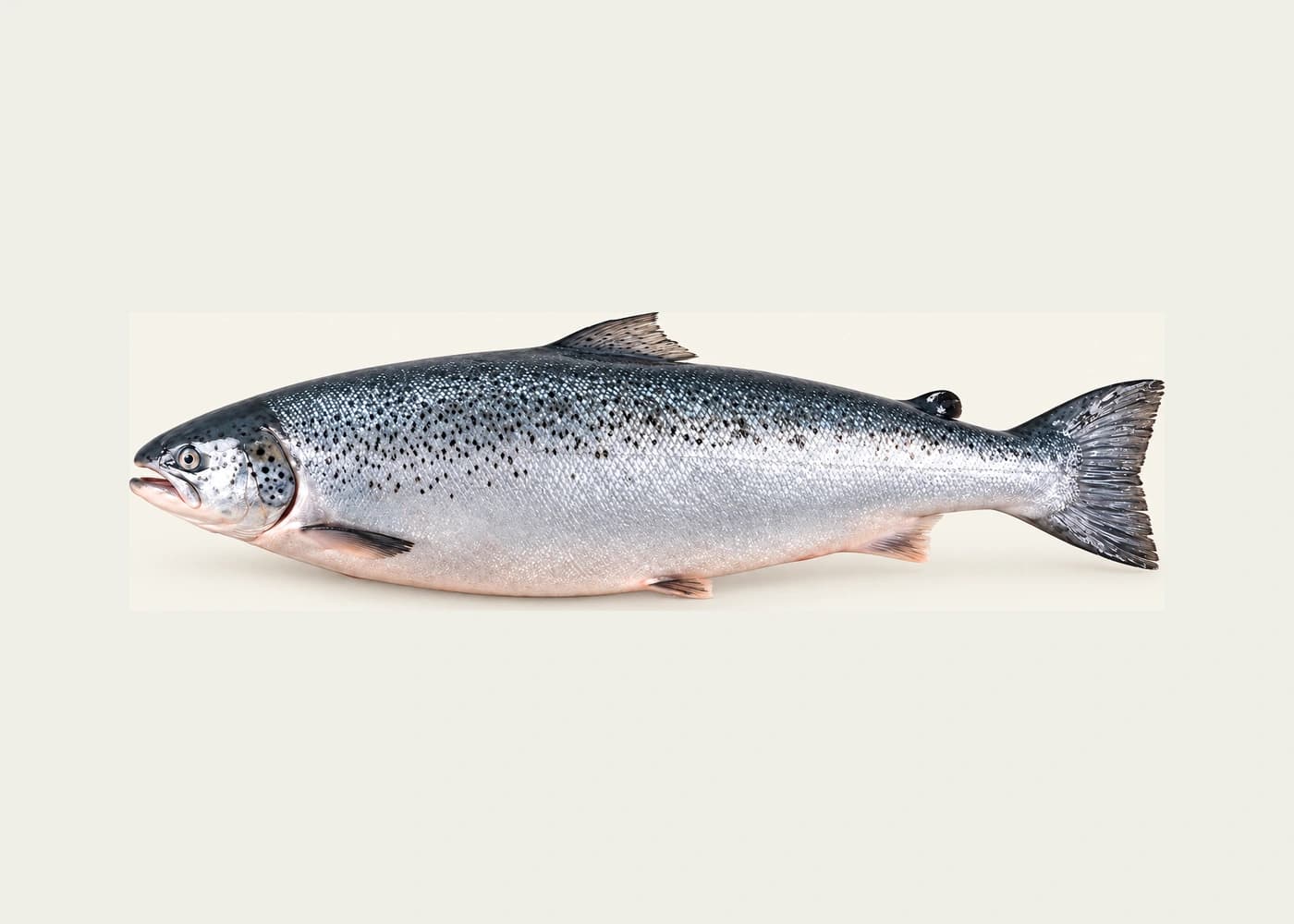
Whole salmon
The complete fish as harvested, before gutting.
The whole animal.
- Typical applications
- Rarely traded in export in this state · Local sale close to the harvest site
- Specify
- Size grade · Chilled or frozen · Packing
Atlantic salmon · Salmo salar
Trim, cuts and specifications
A working reference for filleting, trim levels, portion forms and the specifications that decide what actually arrives. Written to be used before you request an offer.
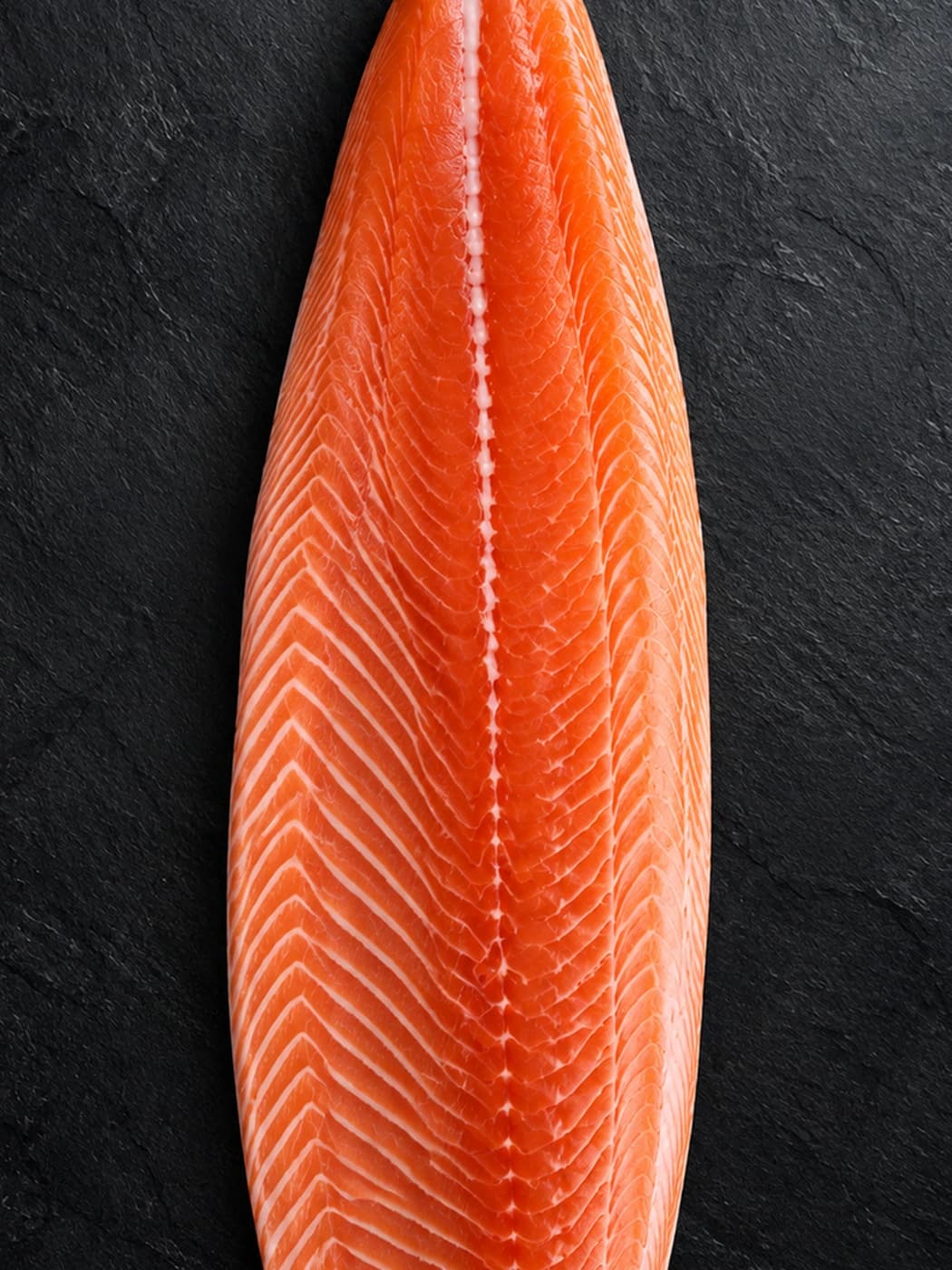
Salmon trim
Trim level describes how much bone, fin, belly fat, back fat and other tissue has been taken off the fillet. It is a measure of processing, not of raw material quality.
Salmon cut
Cut describes the form the product is presented in — whole fillet, loin, centre cut, steak, portion, cube or strip. A product has a trim level and a cut at the same time.
Buyer note
A trim name on its own is not a complete product specification. State skin status, pin bone status, size grade, portion weight and tolerance, packing and intended application alongside it.
Compare trim levels
Photographed at the same scale, angle and lighting so the differences are the only variable. Select a level to see what it typically includes.
A closely trimmed fillet with the belly membrane and remaining fat lines taken off. Widely used where the fillet is portioned downstream.
Typically retained
Typically removed
Common commercial use
Advantages
Trade-offs
Confirm with the supplier
Zones a trim specification may address
Not every zone appears in every trim definition. Only differences a supplier states in writing should be treated as part of the specification.
At a glance
Product cuts
Where a cut comes from decides what it can be used for. Names differ between markets — the description matters more than the label.
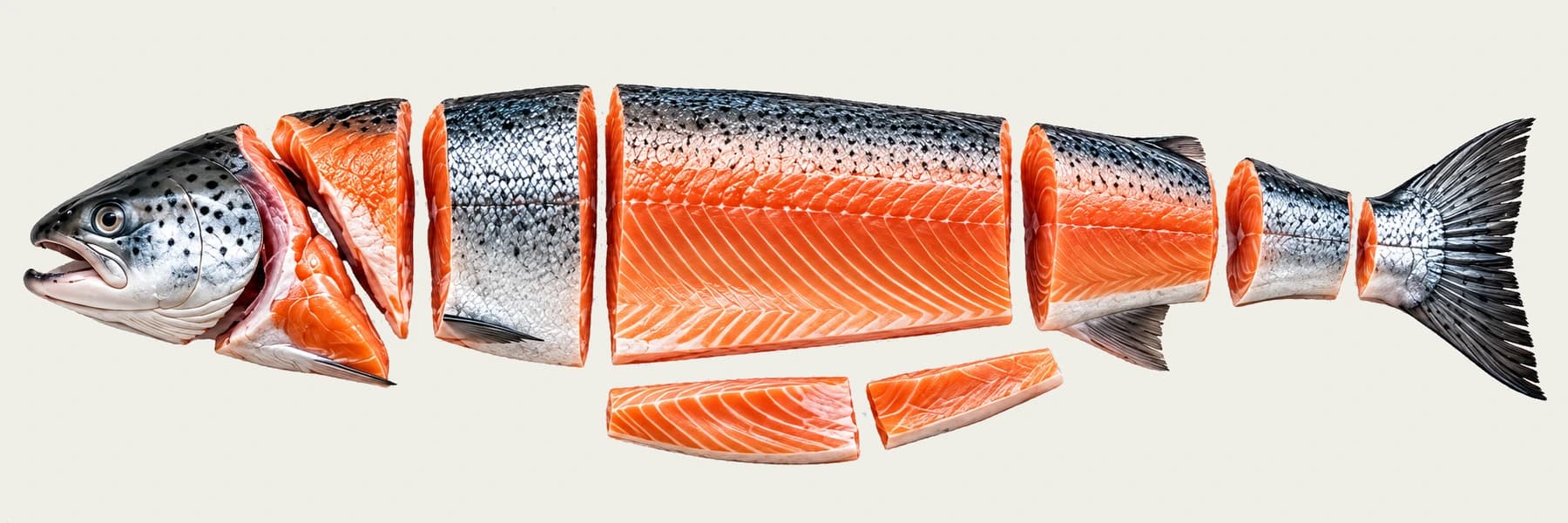
Head · Collar · Shoulder · Back loin · Belly · Tail section · Tail fin
The complete fish as harvested, before gutting.
The whole animal.
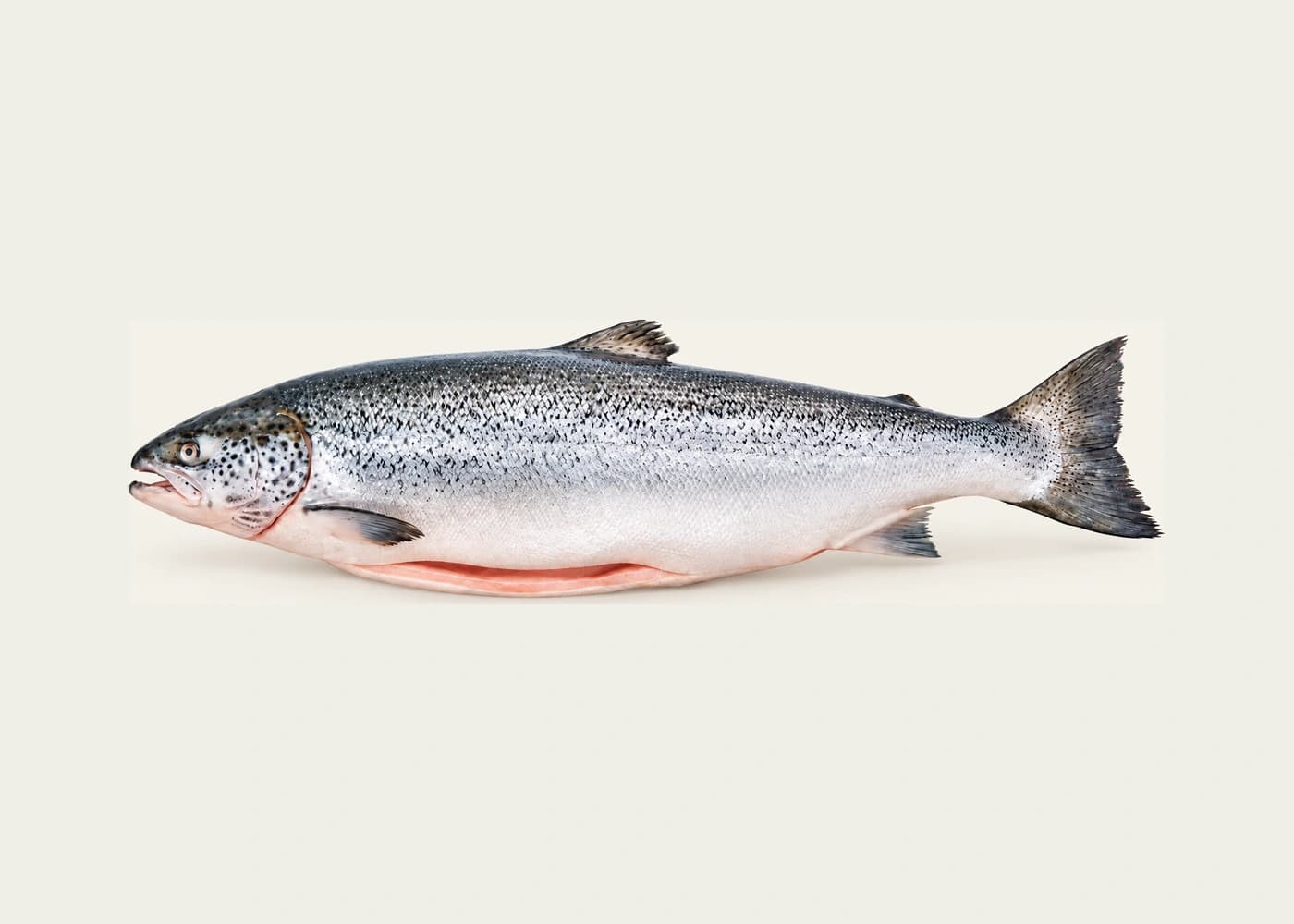
The fish gutted with the head left on. The standard export form for fresh Norwegian salmon.
The whole animal, less viscera.
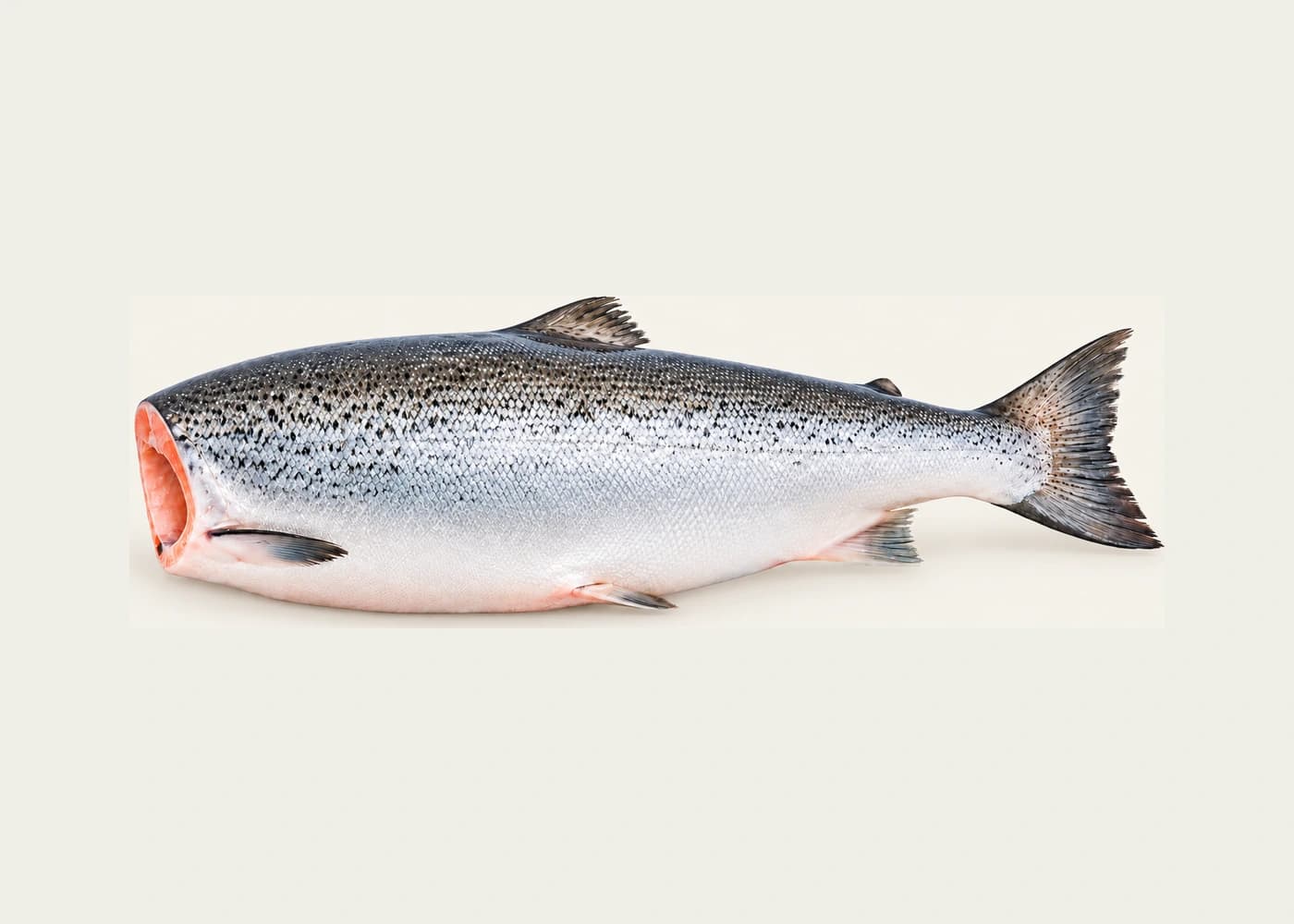
Gutted fish with the head removed.
The whole animal, less viscera and head.
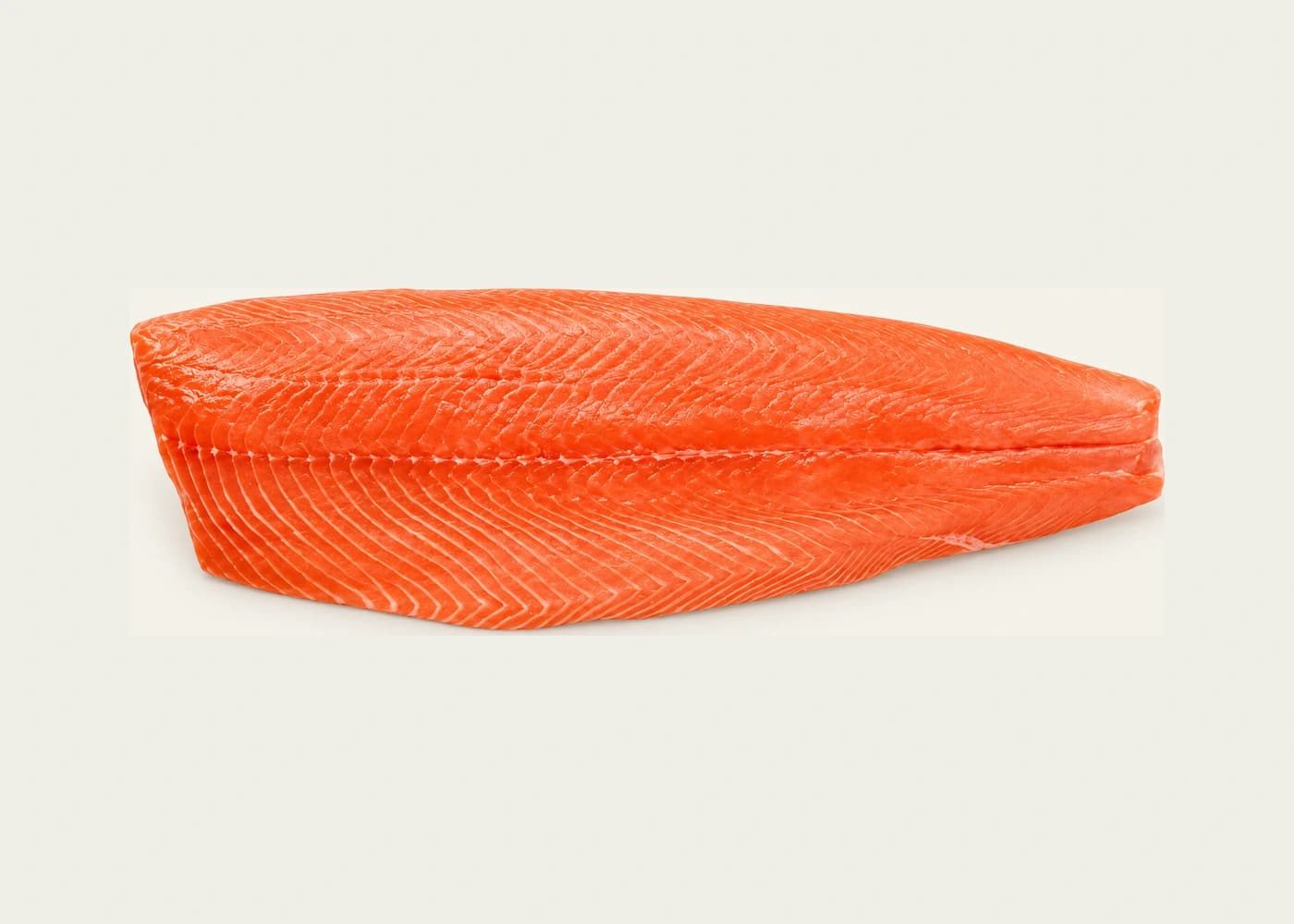
One complete side of the fish, cut away from the backbone.
One full side, head to tail.
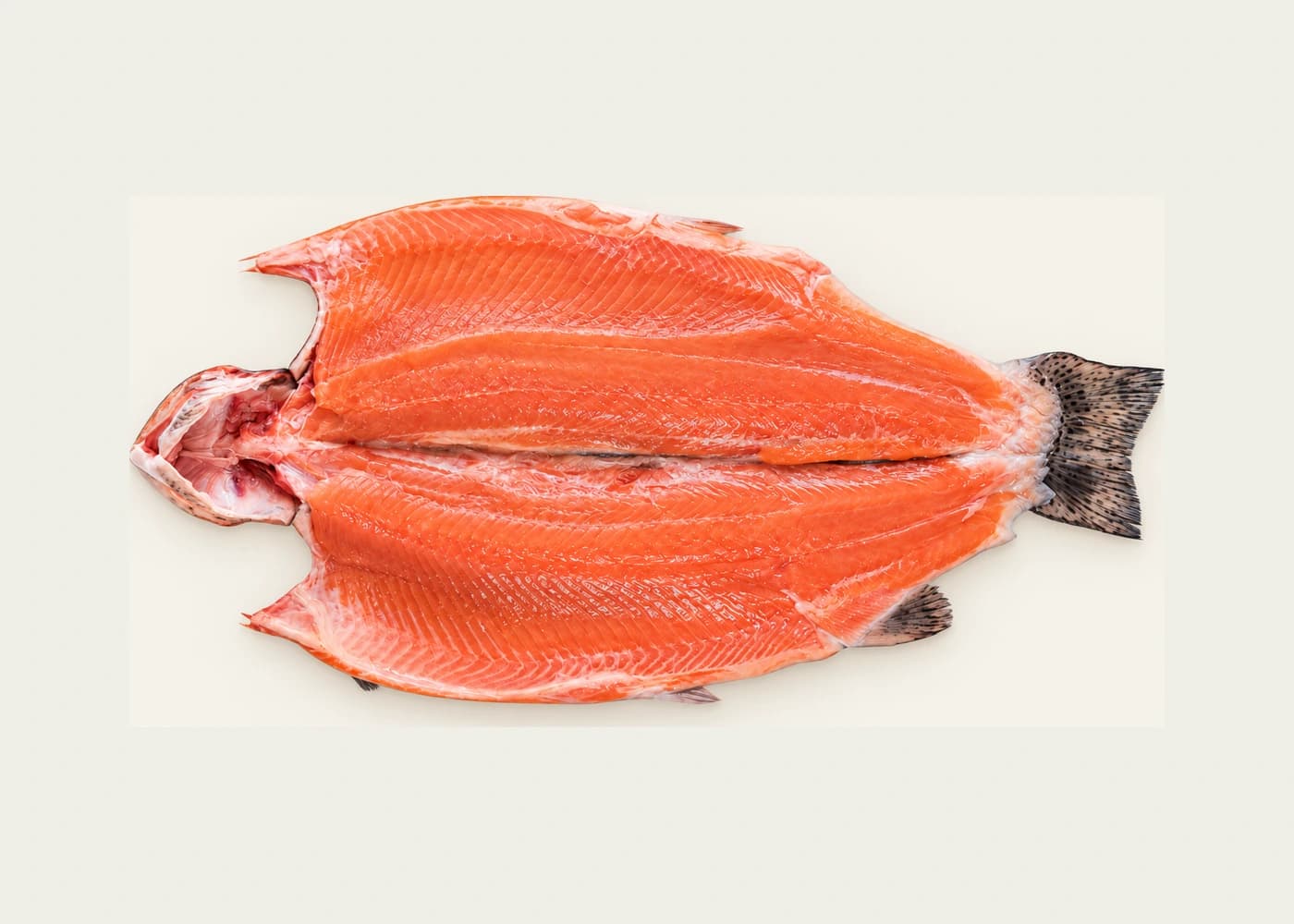
Both sides left joined, usually along the back or belly, with the frame removed.
Both sides of one fish.
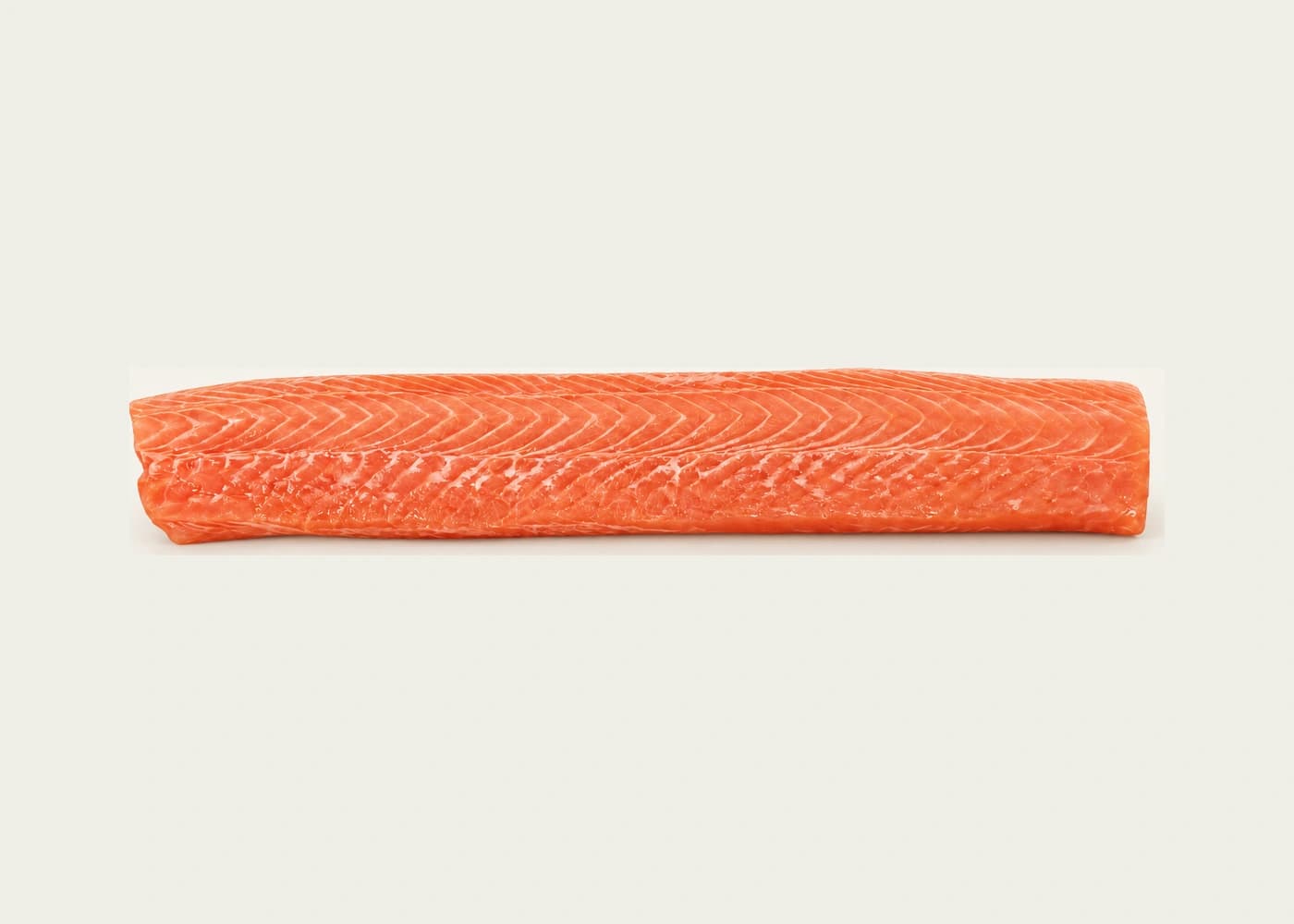
The thick muscle running along the back of the fillet, cut as a long even block.
The dorsal part of the fillet, above the lateral line.
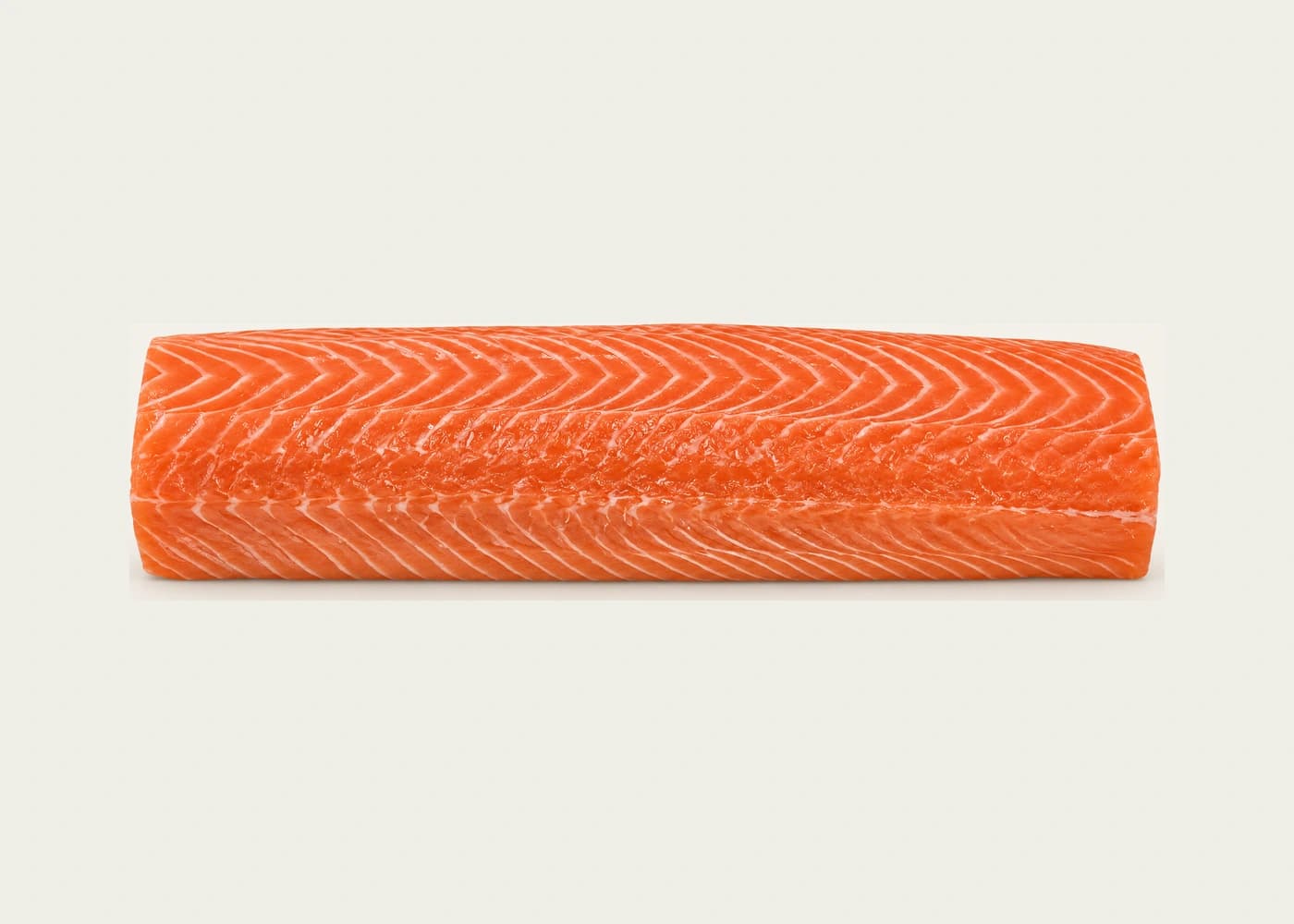
Loin taken only from the middle section of the fillet, leaving out shoulder and tail.
The mid-section of the dorsal muscle.
What counts as centre-cut differs between processors. Confirm the cutting positions, not just the name.
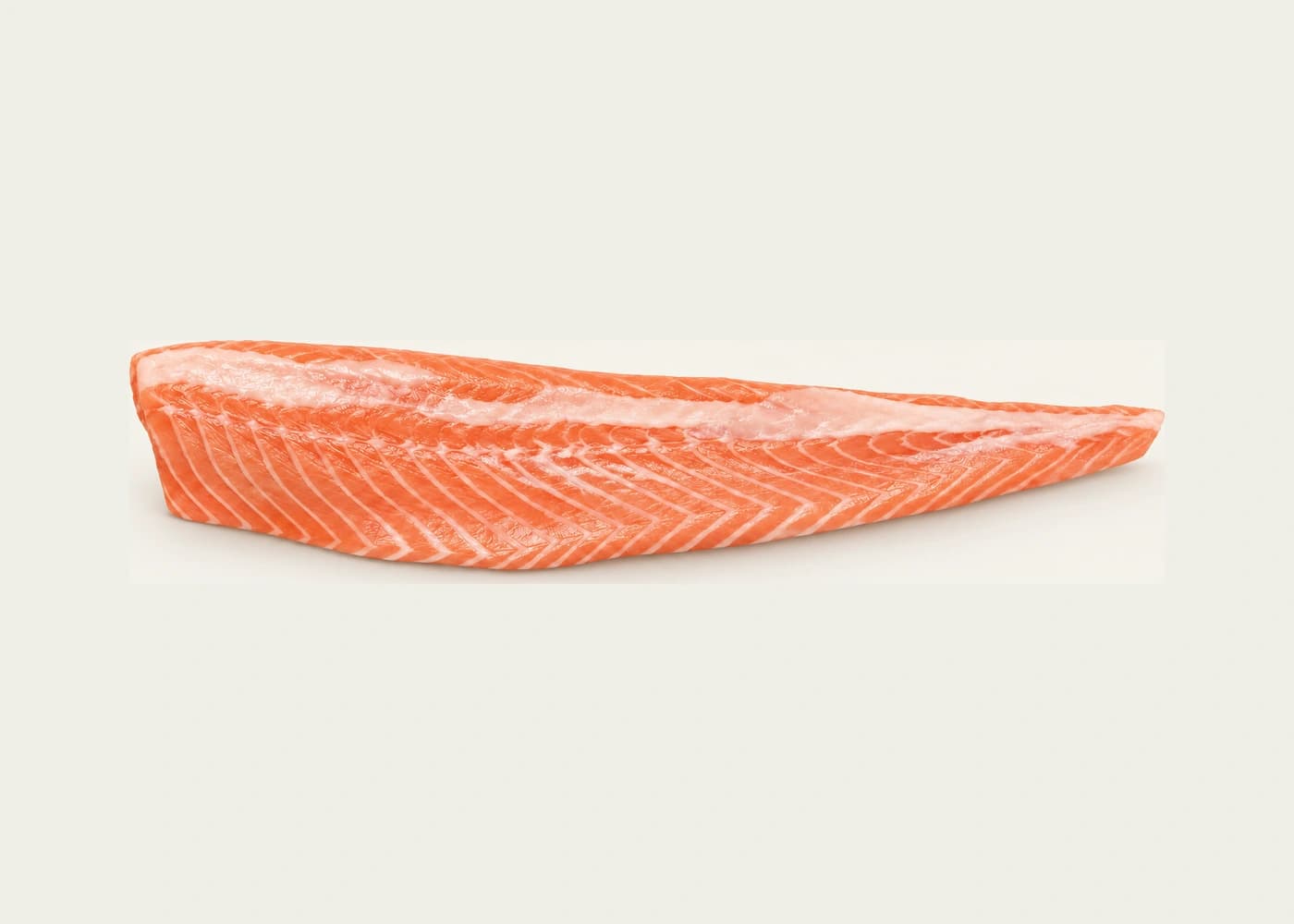
The fatty strip along the lower edge of the fillet.
The ventral edge of the fillet.
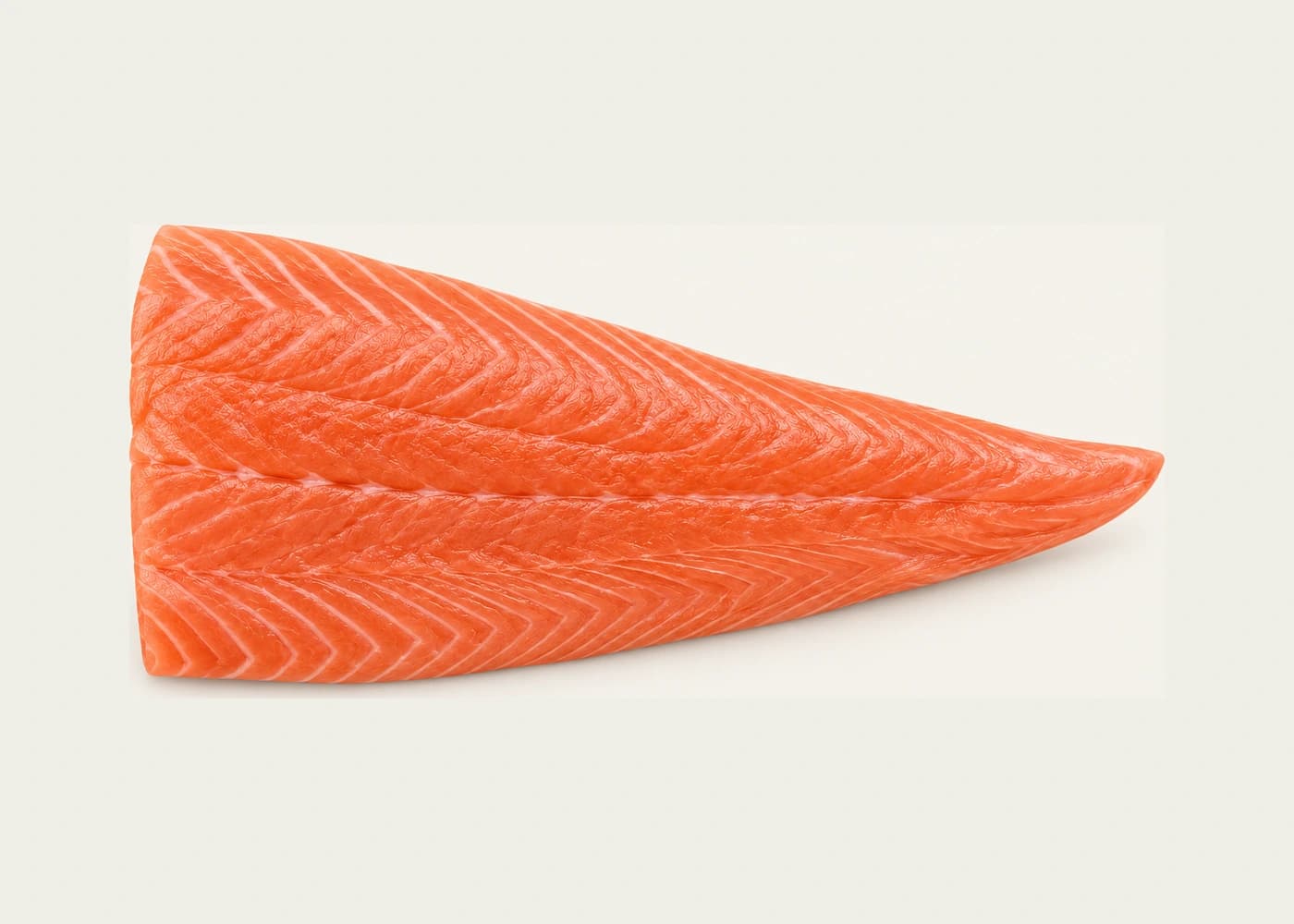
The narrow section from the back end of the fillet.
The caudal end of the fillet.
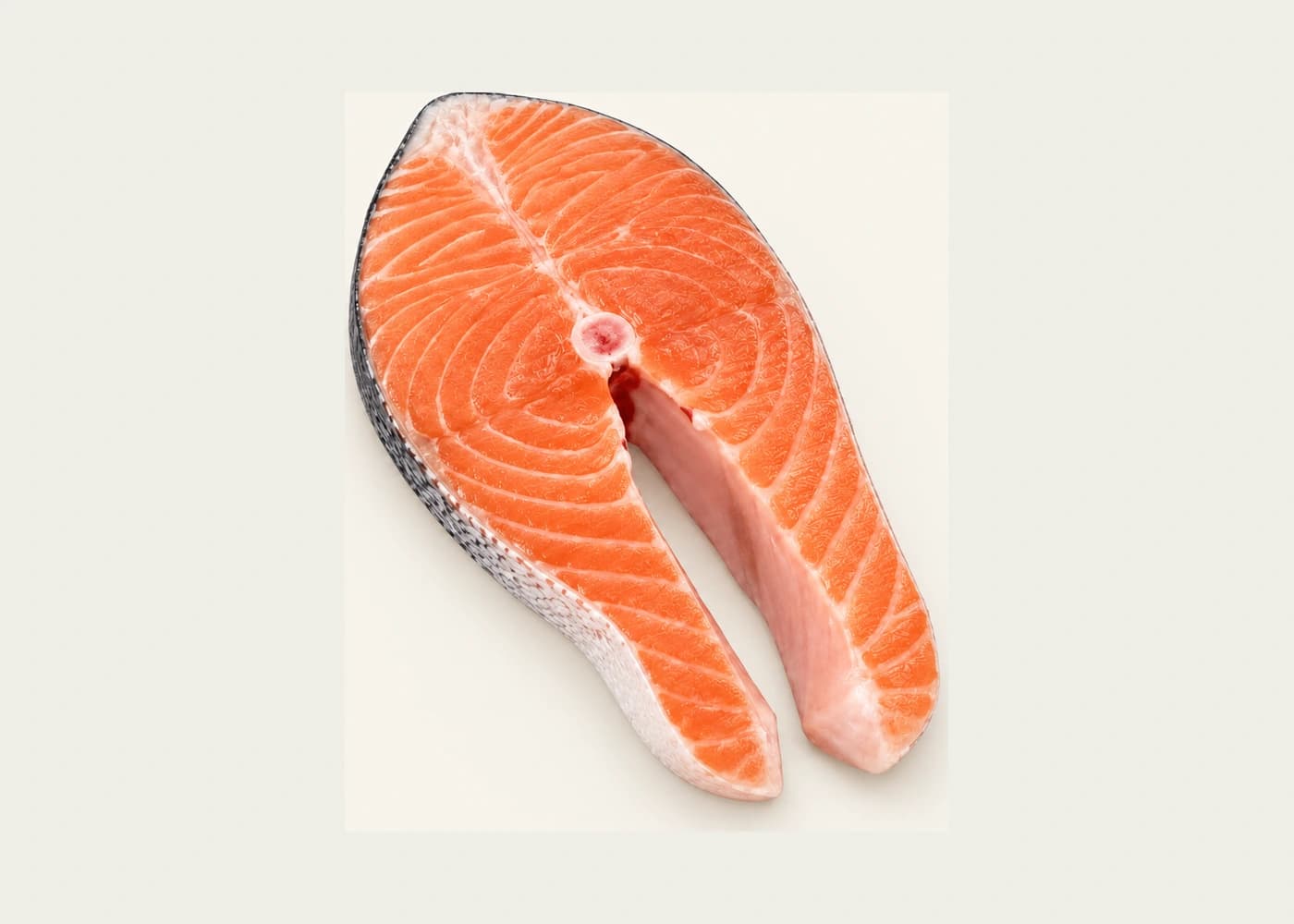
A cross-section cut through the whole fish, including the backbone.
A slice across the body, perpendicular to the spine.
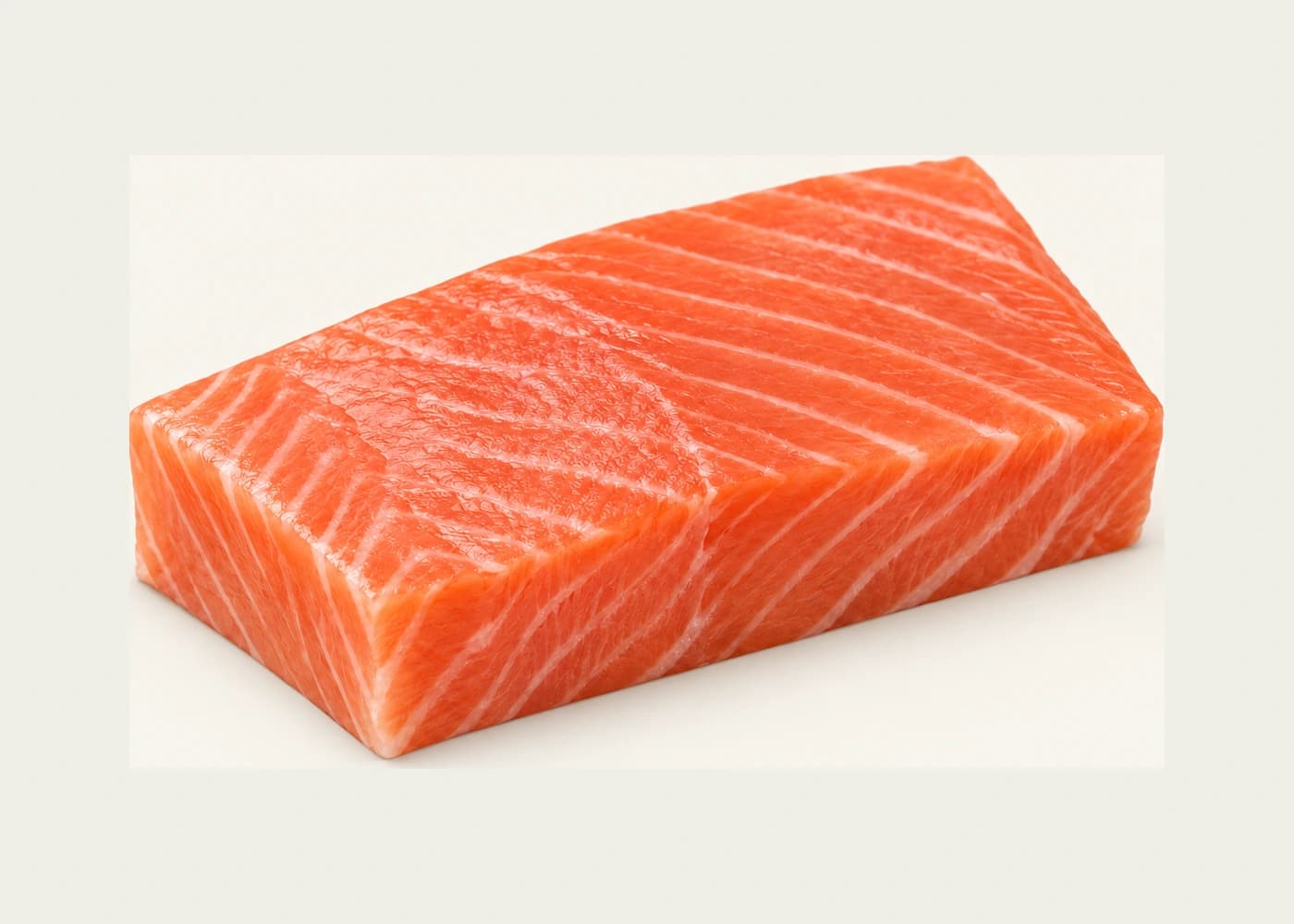
A piece cut from the fillet to a target weight or size.
Anywhere along the fillet — the position determines the shape.
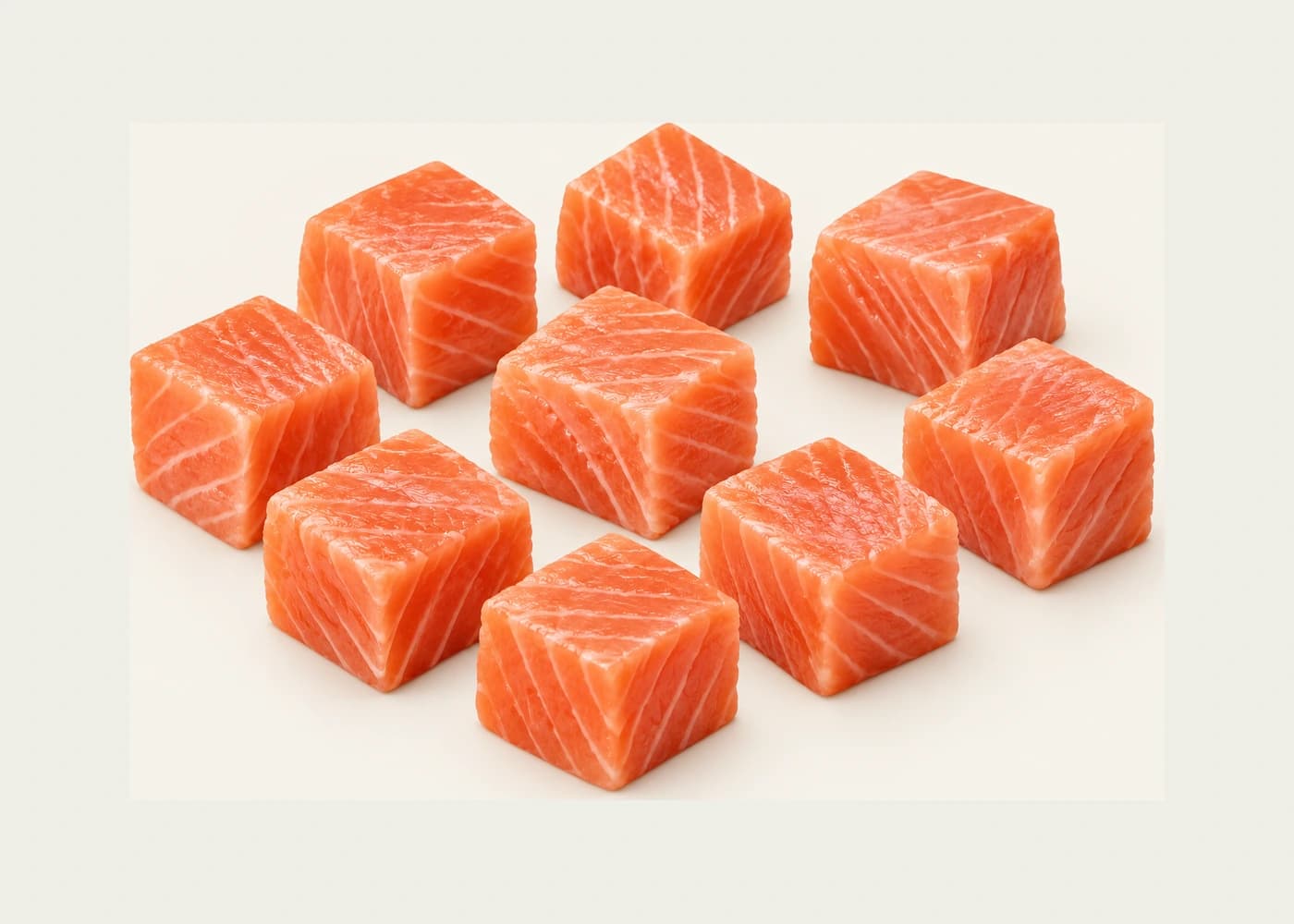
Diced salmon cut to a specified edge length.
Trimmed fillet material, often including off-cuts from portioning.
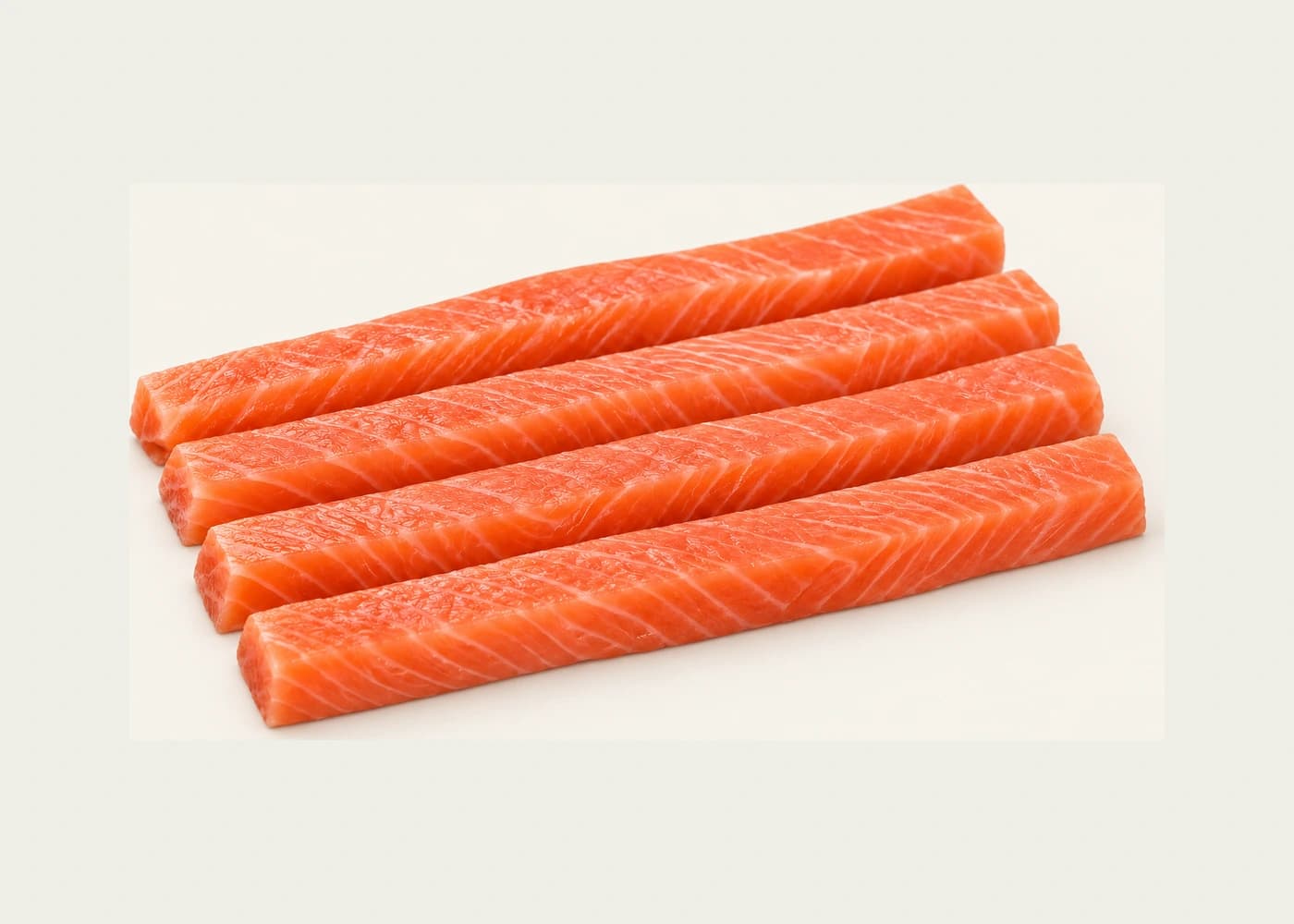
Salmon cut into long narrow pieces.
Fillet or trimmed off-cuts.
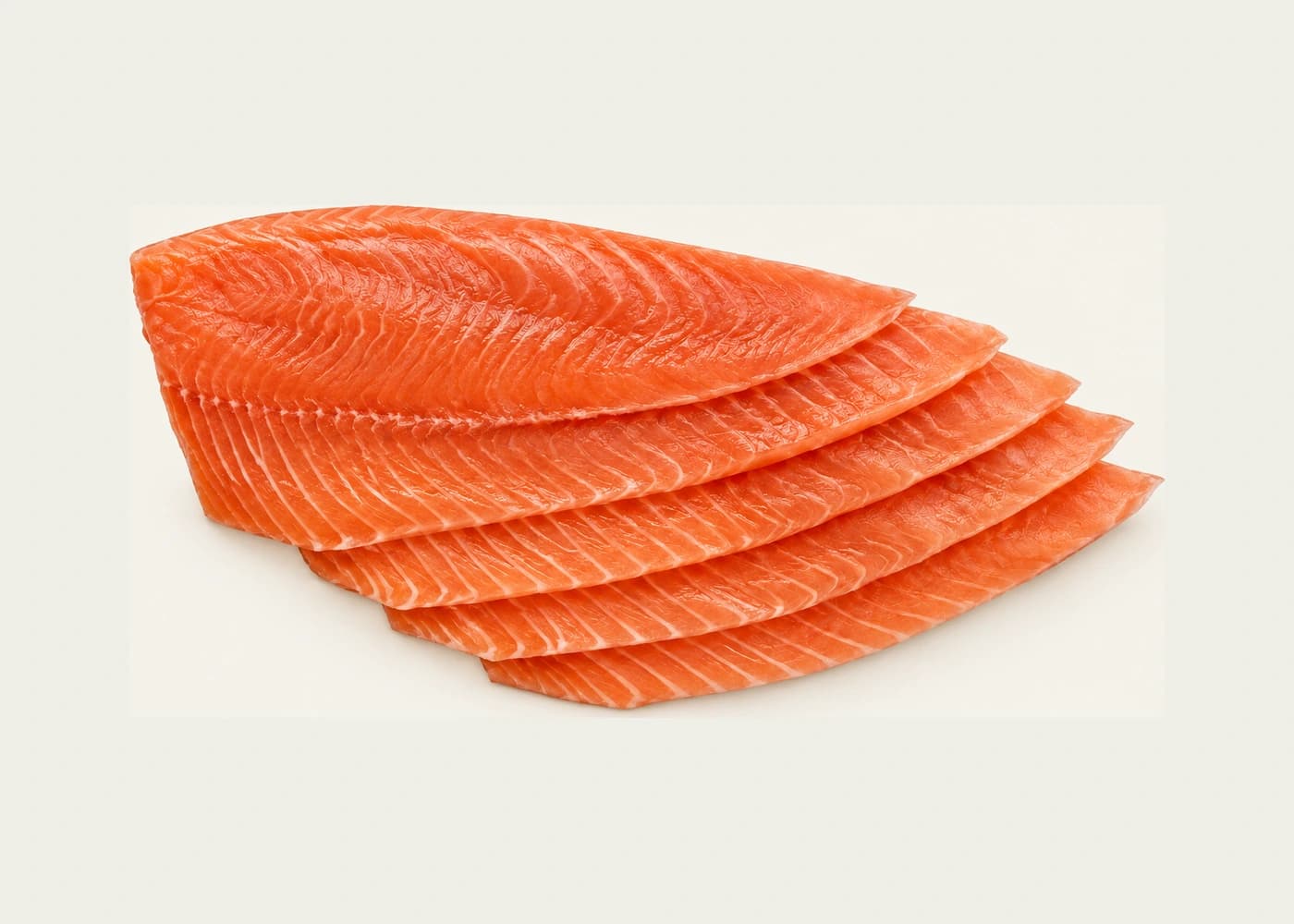
Thin slices, most often associated with cold-smoked product but also traded raw.
Usually the fillet, cut at a shallow angle.
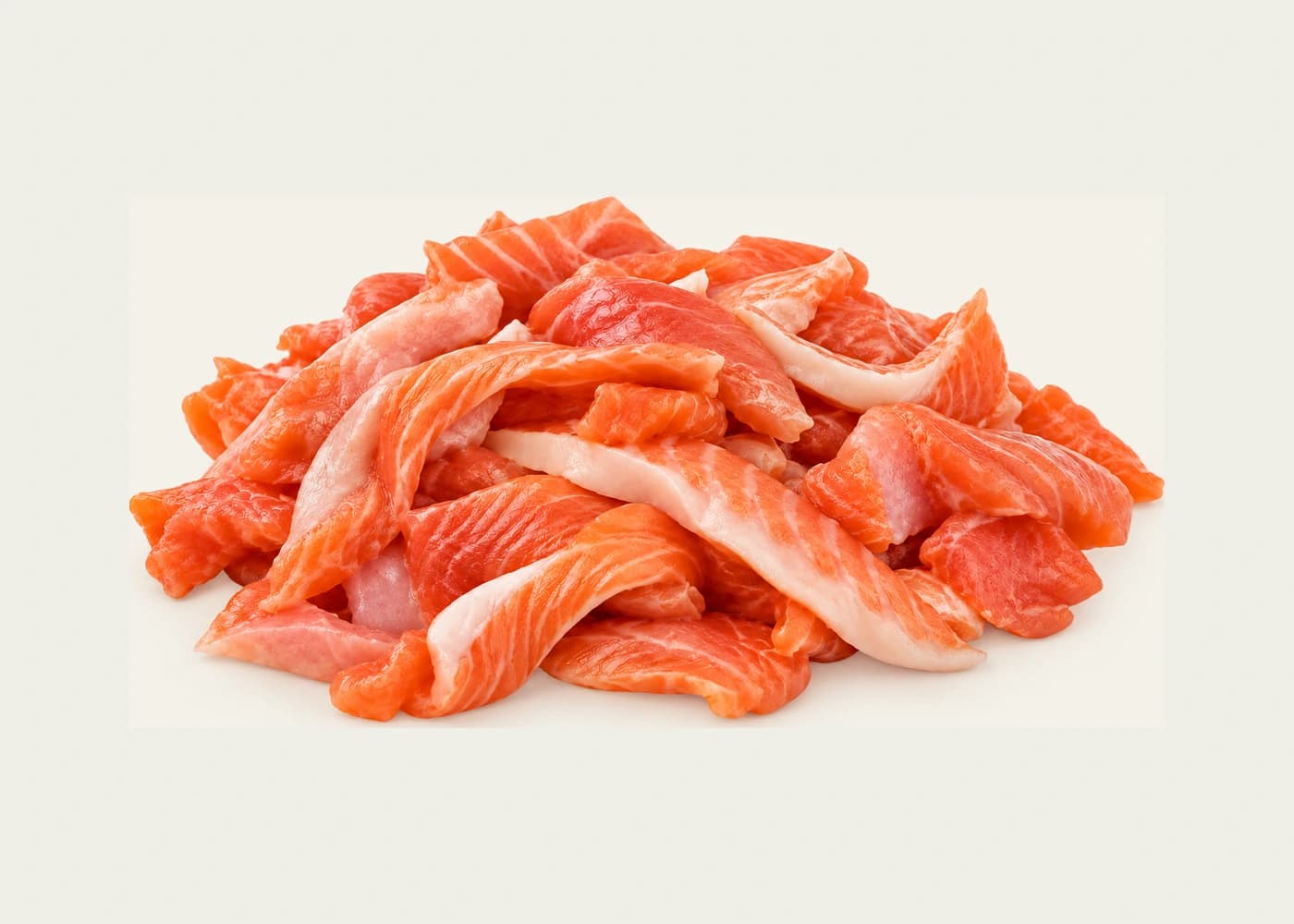
Off-cuts from filleting and portioning, sold as a raw material rather than a finished product.
Belly edges, tail ends and material removed during trimming.
Terminology varies widely. Some suppliers separate trimmings by source and grade; others do not.
Skin and bone
None of these follow automatically from a trim level. Each has to be stated.
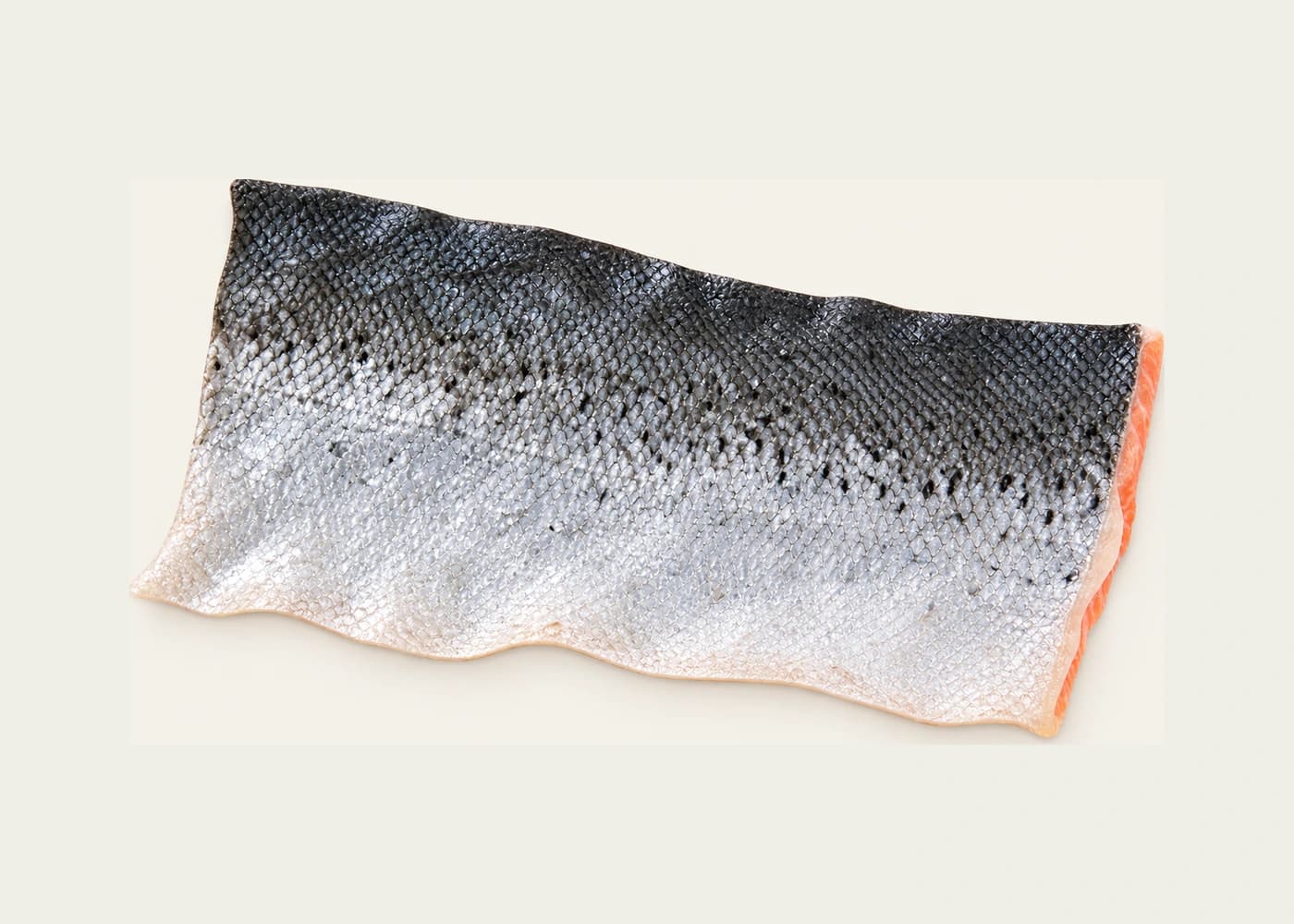
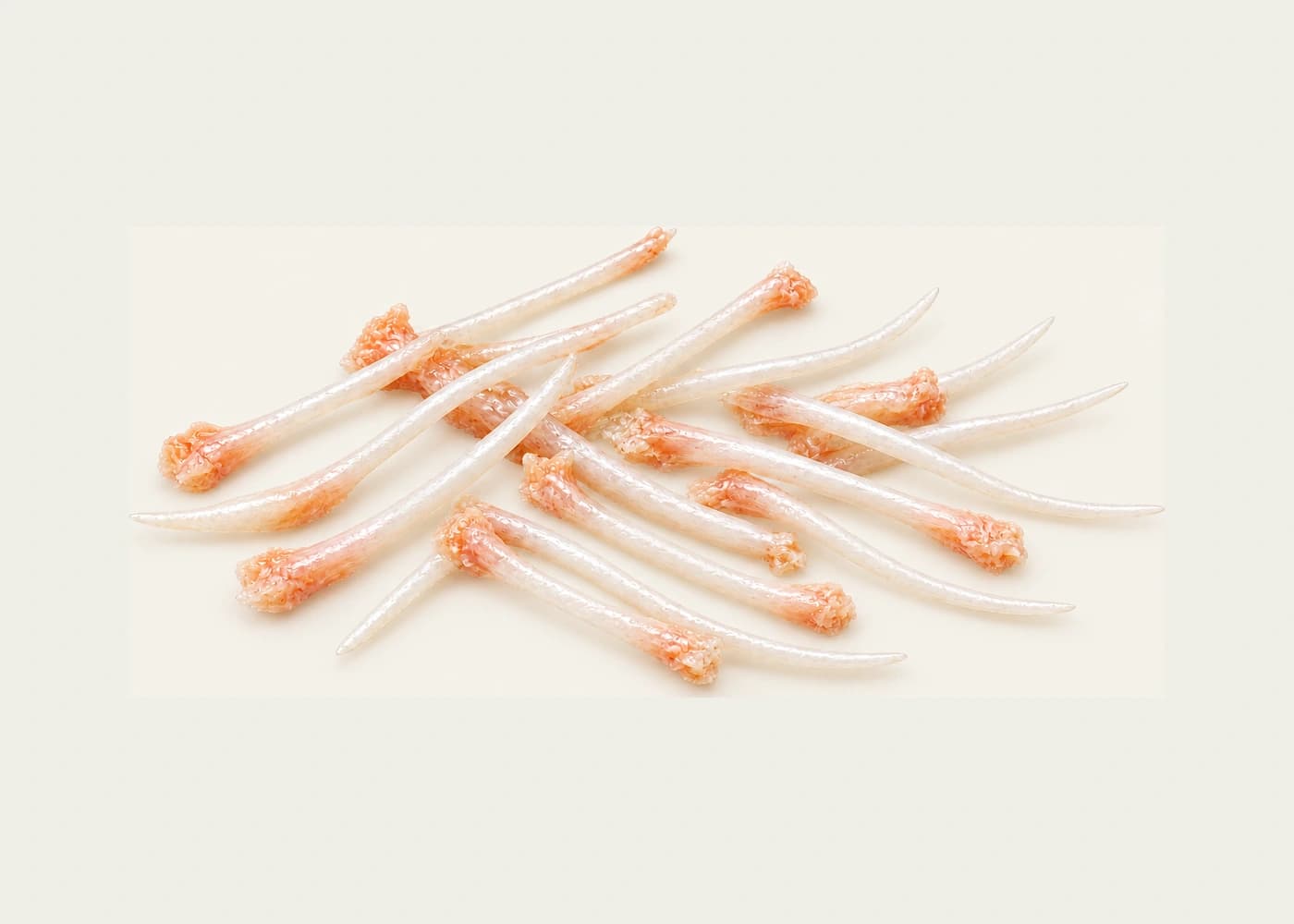
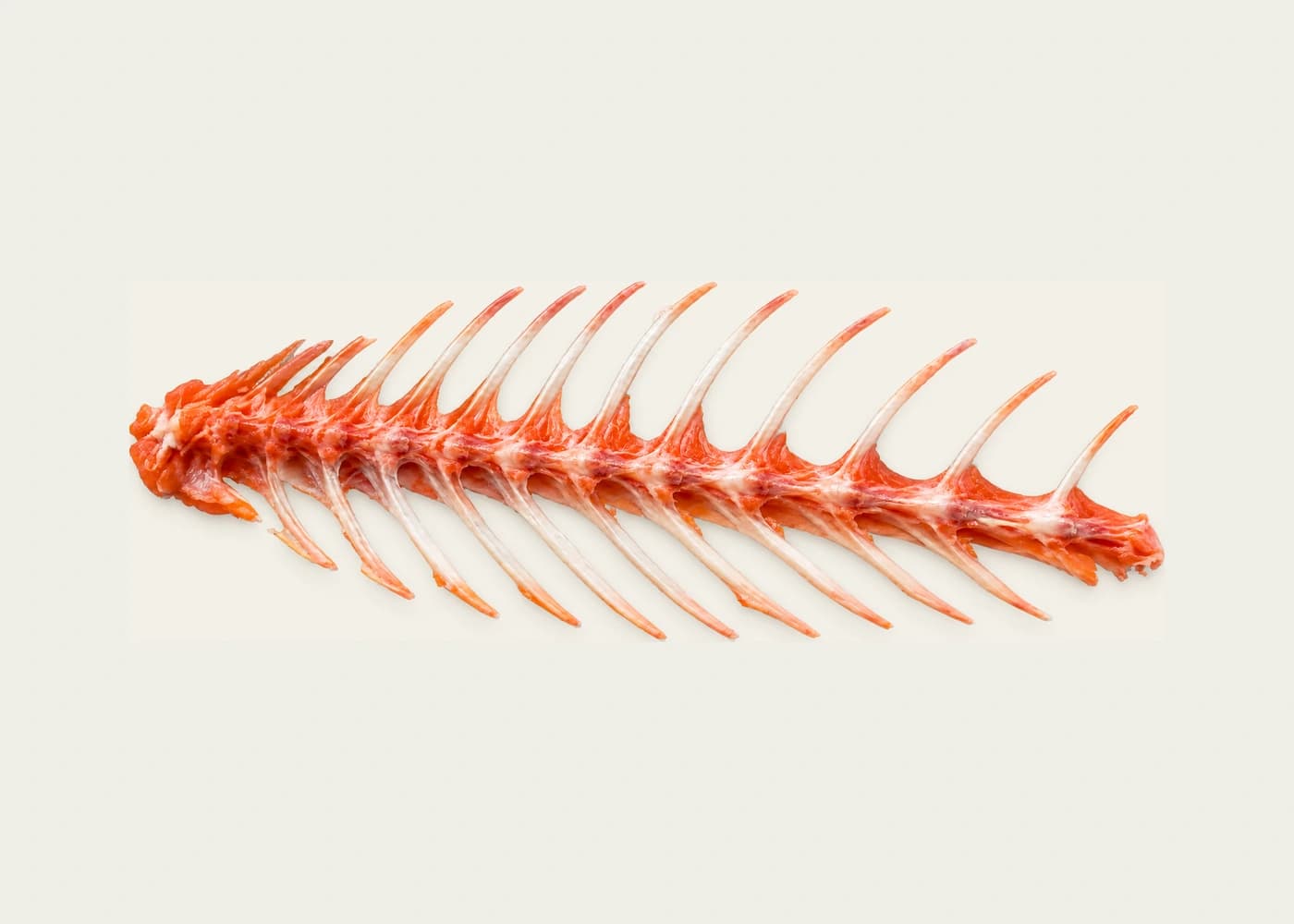
The skin is left on the fillet or portion.
Holds the piece together during cooking and is required for some presentations. Adds weight that the buyer pays freight on.
The skin is removed, normally by machine.
Needed where the product is coated, diced or served without skin. A thin layer of surface fat usually remains.
Skin removed together with the layer directly beneath it.
Gives a uniform surface colour. What exactly is taken with the skin varies between processors — confirm whether brown muscle is included.
Scales removed before packing.
Expected in most skin-on retail products. Ask, rather than assume, on skin-on orders.
Scales left on.
Acceptable where the buyer removes the skin themselves, and avoids a processing step at origin.
The row of small bones along the lateral line is left in place.
Lower processing cost, but the buyer must remove them or declare their presence downstream.
Pin bones removed, normally by machine or by hand.
Required for most retail and food service products. Not implied by any trim level on its own — specify it separately.
Portions
Two portions of identical weight can differ in thickness, shape and application depending on where along the fillet they were cut.
State all of these
Even thickness across the piece. Cooks predictably and plates consistently.
Tapered and thinner. Same weight, different cooking behaviour and presentation.
Higher fat content along one edge, and a less even profile.
Buying guide
| Application | Recommended form | Important specifications | Why it fits |
|---|---|---|---|
| Retail display | Whole fillet or fixed-weight portions | Trim level, skin status, pin bone-out, weight tolerance, retail-ready packing | Shelf presentation depends on an even profile and a predictable pack weight. |
| Restaurant portion | Centre-cut loin or portion | Cut position, target weight and tolerance, thickness, pin bone-out | Plate cost and cooking time both depend on the piece being consistent. |
| Sushi and sashimi | Loin or closely trimmed fillet | Trim level, skin and deep-skin status, handling and cold chain, documentation for the intended use | Appearance and uniform surface matter. Suitability for raw consumption is a food safety and regulatory question, not a property of the cut. |
| Smoking | Whole fillet, or belly cut for fattier product | Trim level, pin bone status, fillet weight band, fat expectations | Smokehouses trim to their own standard, so a lower trim can be the better buy. |
| Ready meals | Portions, cubes or strips | Piece size, source material, fresh or frozen, IQF status | Dosing by weight into a fixed recipe needs a consistent piece. |
| Catering and foodservice | Portions, variable or fixed weight | Weight band, skin status, packing format, units per carton | Volume handling favours a format that goes straight from carton to production. |
| Further processing | Whole fillet at a lower trim | Trim level, pin bone status, fillet weight band | A processor with trimming capacity buys material, not finished shape. |
| Industrial production | Trimmings, cubes or strips | Source of material, fat content expectations, piece size, frozen format | Cost per kilo of usable protein drives the decision. |
Suitability for raw consumption is not a property of a cut or a trim level. It depends on handling, documentation and the rules of the destination market, and has to be agreed separately.
Build the specification
Select what you need. The summary is written as a supplier-ready specification and can be carried straight into the request form.
Trim level
Product cut
Skin
Pin bones
Condition
Your specification
Norwegian farmed Atlantic salmon (Salmo salar). portion. Trim D or equivalent supplier specification. skin-on. pin bone-out. frozen.
Trim naming varies between producers. This text is a starting point for a request — the binding specification is the one agreed in the offer and contract.
Full order checklist
Example of a clear request
Norwegian farmed Atlantic salmon portions, Trim D or equivalent supplier specification, skin-on, scaled, pin bone-out, individually vacuum packed, frozen, portion weight range to be confirmed against our tolerance, monthly volume and destination port as stated below, Incoterm as stated below.
Illustrative only. Weights, volumes and Incoterms are stated by the buyer, and the product description, tolerances and quality criteria are confirmed in the final agreement.
Supplier variation
Trim terminology varies between producers, processing plants and markets. The written product specification, approved product images, tolerances and contractual documentation take precedence over the trim name alone.
Trim terminology is not standardised across the industry. Some Norwegian producer specifications run A to F rather than A to E, and define each level by what is absent rather than against a shared scale. Two suppliers can use the same letter for different products.
Questions
Trim describes what has been removed from a fillet — bones, fins, fat lines, membrane and in some cases skin. Cut describes the shape the product is presented in, such as a whole fillet, loin, portion, steak or cube. They are separate specifications. A product can be Trim D and a portion at the same time, and stating only one of the two leaves the order incomplete.
They describe increasing levels of trimming, from a fillet with the belly bones taken out through to a closely trimmed and often deep-skinned product. The direction of the scale is consistent across the industry, but the exact content of each level is not. Treat the letter as a starting point for the conversation, then agree the detail in writing.
No. Pin bone removal is a separate specification from trim level. A fillet can be closely trimmed and still have pin bones in place. Always state pin bone-in or pin bone-out explicitly, at any trim level.
No. A higher trim level means more material has been removed and more processing has been done. It says nothing on its own about the raw material — freshness, grading, fat content, colour, gaping or handling. A closely trimmed fillet from a poorly handled fish is still a poorly handled fish. Quality grade and trim level are assessed separately.
A fillet is one complete side of the fish. A loin is the thick dorsal muscle cut out of that fillet as a long even block. A portion is a piece cut to a target weight or size, and can be taken from anywhere along the fillet. The three describe progressively more specific products cut from the same side of fish.
At minimum: trim level, cut position along the fillet, target weight, weight tolerance, skin status, pin bone status, fresh or frozen, packing format, and net weight basis. Two portions of identical weight can differ substantially in thickness and shape depending on where along the fillet they were cut.
Yes, and they do. Some producer specifications run A to F rather than A to E, and the same letter can describe different products at different plants. The written product specification, approved product images and the contract take precedence over the trim name.
Retail and food service generally want fixed-weight portions or closely trimmed fillets. Restaurants favour centre-cut loins where consistency matters on the plate. Smokehouses often prefer a lower trim because they trim to their own standard. Processors buying raw material usually want whole fillets at a lower trim, or trimmings where the end product is minced or diced.
Ask for the supplier product sheet, agree the grading standard and rejection criteria in writing before the first shipment, and where possible approve a physical sample or approved product photographs against the written specification. Verify certificates against the issuing register rather than accepting a logo on a document.
Fish of Norway collects offers against your product form, trim, cut, volume, market, delivery window and commercial terms — standardised so they can be compared on one basis.
See also Atlantic salmon specification, quality and compliance and logistics.